
MAX Speed | October 24, 2026 | House and Garage Life
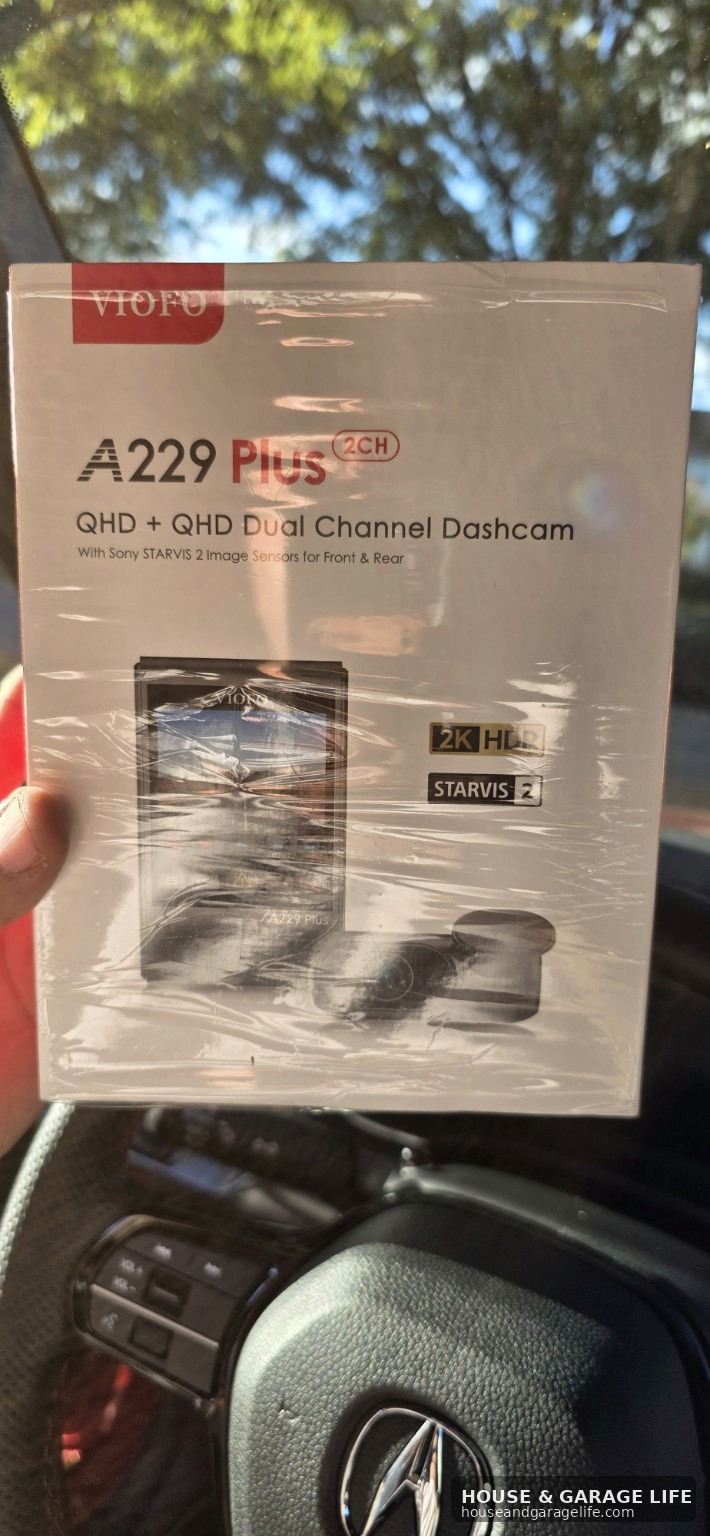
A dashcam upgrade has been on our list for the Integra Type S, and today we finally unboxed and fitted the VIOFO A229 Plus 2CH. This is our installation-day account, followed by what longer-term owners say about the camera. We have not yet completed our own extended road-footage or reliability test.

Unboxing: what’s in the box
The first impression is tidy and practical. The foam insert holds the main dashcam and smaller rear camera securely; the documentation and long rear-camera cable are packaged separately. Everything in the gallery was photographed during the actual unboxing, with only conventional exposure, color and clarity adjustments.


Installation in the Integra Type S
For our install, the front camera sits high by the windshield and mirror area, and the rear unit is mounted on the back glass. The setup is designed to look unobtrusive from the driver’s seat. By the time both were mounted, daylight had faded, so a few of the photos were taken at night.


Routing cables cleanly around trim is the time-consuming part of many front-and-rear installs. Anyone attempting this should keep wiring clear of curtain-airbag deployment paths and verify that both cameras record before finishing the trim. We are documenting our install, not presenting a complete vehicle-specific wiring tutorial.
What the A229 Plus promises
VIOFO lists two Sony STARVIS 2 IMX675 sensors, 1440p capture at both ends, HDR, GPS, voice functions, and 2.4/5GHz Wi-Fi. Available frame-rate combinations depend on the recording configuration; the front camera supports up to 60 fps in supported modes. The system also offers optional parking-recording modes, but continuous parking recording requires the appropriate separately powered hardwire installation.
Full manufacturer specifications: VIOFO A229 Plus 2CH.
What other owners think
The broad pattern across retailer reviews and owner reports is encouraging but not flawless. Owners regularly praise day and night image quality, useful coverage from two cameras, and good value compared with more expensive alternatives. Many describe the physical installation as straightforward once the cable routing is planned.
- Video: Frequently praised for clear front and rear footage, though distant license plates and glare at night remain limits of a dashcam.
- Installation: Usually manageable as a DIY job, but hiding the cable and setting up optional parking mode can take patience.
- App and Wi-Fi: Mixed reports. A recurring complaint involves phone connections, particularly when wireless CarPlay tries to reclaim Wi-Fi.
- Reliability: Experiences vary: some owners report years of trouble-free use, while others mention accessory issues or recording/app glitches.
Further reading: Automoblog’s hands-on review and review sampling, Best Buy customer reviews, and one two-year owner report. Owner accounts are individual experiences, not controlled tests.
Our first impression and what’s next
So far, we like the compact front-camera position and the security of having rear coverage as well. The photos document the hardware installed and powered on; they do not prove the system’s recording performance in motion. Our next step is to review actual daytime and nighttime clips, check plate readability, and see how smoothly the app works in daily use before calling this a full long-term review.

House and Garage Life — MAX Speed. More hands-on photos and follow-up impressions at houseandgaragelife.com.
Disclosure: This documents our own installation. General product-performance claims above come from VIOFO’s published specifications and independently reported customer experiences, not untested claims about our particular unit.